Introduction
Planning a road trip is exciting—but choosing the right car for your adventure? That’s where many travelers get stuck. The wrong vehicle can turn a dream journey into a stressful, bumpy ride. On the other hand, the perfect car can elevate your trip into an unforgettable experience filled with comfort, safety, and freedom.
In this comprehensive guide, you’ll learn how to choose the right car for your road trip, which features matter most, and how to make smart choices about car rental insurance—including what you actually need and what’s a waste of money. By the end, you’ll be fully prepared to hit the road with confidence and peace of mind.
Let’s begin!
Body
1. Define Your Road Trip Needs First
Before choosing the car, consider:
Distance: Long routes require fuel-efficient, comfortable cars.
Terrain: Mountains? Go for AWD or SUV. Highways? Sedans are ideal.
Passengers: More than 3 people? You’ll need more legroom.
Luggage: Families should consider vans or large SUVs.
Pro Tip: According to travel surveys, 78% of road-trippers value comfort more than speed—so prioritize space and seating ergonomics.
2. Prioritize Comfort & Interior Space
Comfort is king on long routes.
Look for:
Supportive seats
Rear-seat space
Adjustable steering
Dual-zone climate control
Smooth suspension
Story Element: Imagine cruiing for 6 hours with cramped legs and stiff back—that’s the fastest way to ruin your trip. Choose comfort wisely.
3. Choose Fuel Efficiency for Savings
Fuel costs can take a big bite out of your travel budget.
Hybrid cars offer the best mileage
Sedans often beat SUVs in consumption
Diesel engines are great for long-distance travel
Stat: The average American road trip covers 1,200+ miles. A fuel-efficient car can save you up to $150–$250 per trip.
4. Safety Features You Should Never Ignore
Safety is non-negotiable. Ensure the car includes:
ABS braking
Stability control
Lane assist
Blind spot monitoring
Airbags (front + side)
According to the NHTSA, advanced safety features reduce accident risks by 27%. That’s huge.
5. Navigation & Tech Essentials
A good road trip needs good tech support. You’ll want:
Built-in GPS or Apple CarPlay/Android Auto
USB charging ports
Bluetooth
Backup camera
Cruise control
Even better? Adaptive cruise control for long highway stretches.
6. Match Your Car to the Terrain
Highway drive? Choose a sedan or crossover.
Hilly/mountainous areas? SUV or AWD vehicle.
Off-road adventure? 4×4 Jeep or rugged SUV.
Terrain compatibility improves safety and reduces vehicle strain.
7. Don’t Underestimate Cargo Space
A cluttered car equals a stressful journey.
For groups of 3–5: Choose a mid-size SUV.
For solo travelers or couples: A sedan or compact car works.
For family vacations: Minivans offer unbeatable space.
Bonus: Roof racks can be a game changer.
8. Check Car Reliability & Reviews
Before renting or booking any car model, check:
Consumer reviews
Safety ratings
Reliability scores
Websites like Kelley Blue Book and Edmunds provide user-based ratings that help avoid mechanical issues during trips.
9. Understand the True Cost of Renting a Car
Cost is not just the rental price.
Factor in:
Mileage limits
Fuel rules
Extra drivers
One-way drop fees
Insurance (explained in detail below)
These hidden fees can increase total cost by 20–40%.
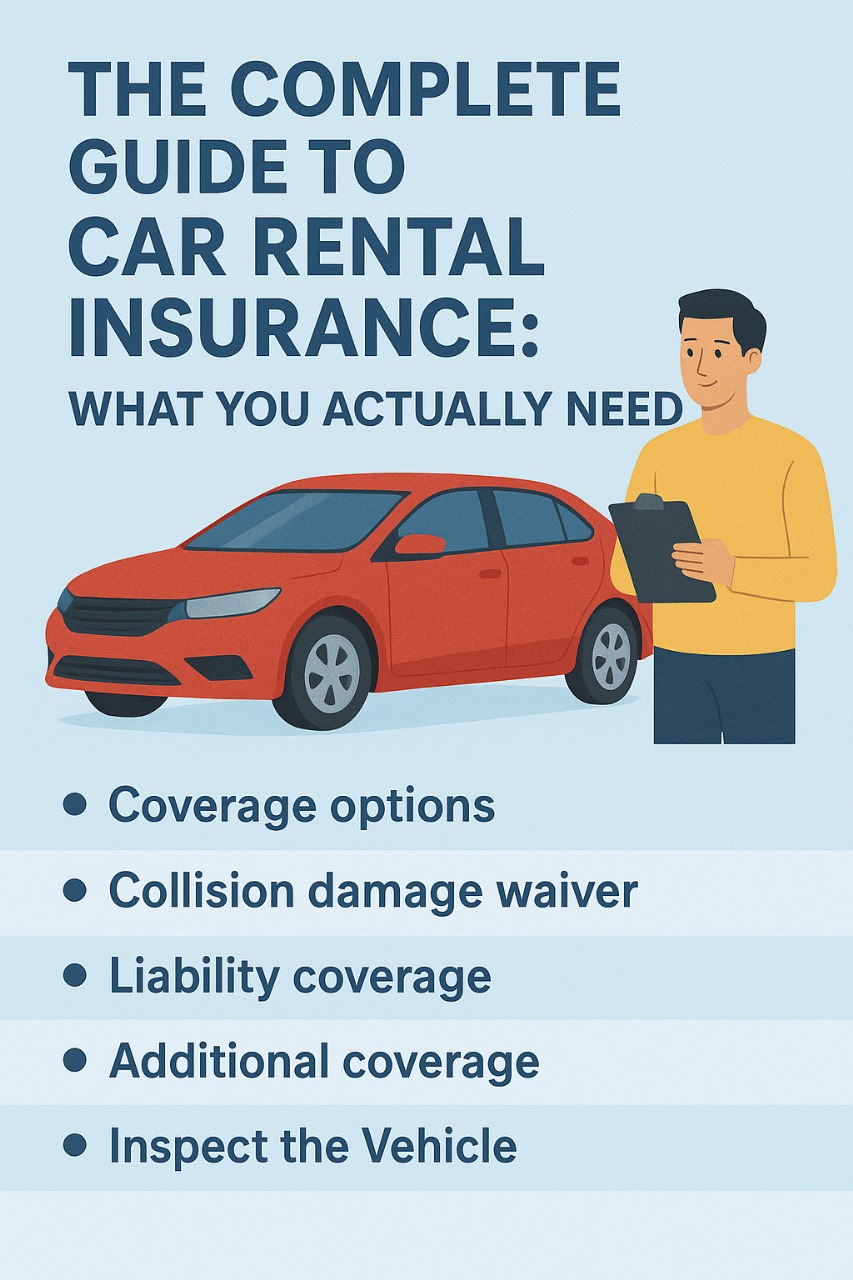
10. The Complete Guide to Car Rental Insurance: What You Actually Need
Many travelers overpay for car rental insurance because they don’t know what’s essential and what’s optional. Here’s the breakdown:
✔ Collision Damage Waiver (CDW) – Usually Important
CDW covers damage to the rental car in an accident.
Do you need it?
If your personal auto insurance already covers rentals → You may skip it.
If you don’t have insurance → You should get it.
Good news: Many credit cards already include CDW insurance for free.
✔ Liability Insurance – Essential
This covers damage or injury to others.
Some countries require it by law.
Rental companies often offer very low default liability limits.
Always ensure you have minimum $1 million liability coverage for best protection.
✔ Personal Accident Insurance (PAI) – Optional
Covers injury to you or your passengers.
Skip this if:
You already have health insurance.
You have travel insurance with medical coverage.
✔ Personal Effects Coverage – Optional
Covers stolen luggage.
Skip this if:
Your home insurance or travel insurance covers personal belongings.
What Most Travelers Actually Need:
Liability coverage
CDW (if your card doesn’t include it)
Everything else is typically optional.
Money-saing tip: Travelers waste about $100–$180 on unnecessary add-ons per rental. Be smart and only pay for what you need.
11. Test Drive or Inspect the Car Before You Start
Check for:
Tire condition
Brake response
A/C performance
Engine noise
Any pre-existing damage
Take photos before driving off.
12. Choose a Car That Matches Your Driving Style
If you like smooth rides → Sedans
If you love adventure → SUVs
If you prefer luxury → Premium cars
If you want economy → Hybrid hatchbacks
Your comfort matters.
Conclusion
Choosing the right car for your road trip doesn’t need to be confusing. By understanding your route, comfort needs, terrain, safety requirements, and insurance essentials, you can make a well-informed choice that enhances your journey rather than complicating it. Whether you’re exploring scenic coastlines or cruising through rugged mountains, the right vehicle ensures safety, comfort, savings, and unforgettable memories.
Your road trip deserves excellence—and with this guide, you’re now equipped to choose the perfect car with confidence and clarity.
Top 10 Expert Tips to Choose the Perfect Car for Your Road Trip (Plus: The Complete Guide to Car Rental Insurance)