Introduction
Planning a road trip is thrilling, but the excitement can quickly turn into frustration if you choose the wrong car. Your vehicle is more than just transportation—it’s your comfort zone, your safety net, and your adventure companion. Choosing the right car can make your journey smooth, memorable, and stress-free, while a poor choice can ruin the experience. In this guide, we’ll break down six expert strategies to help you select the perfect car for your road trip, packed with practical tips, stats, and actionable advice that every traveler must know.
1. Consider Your Trip Length and Destination
The first question you must ask yourself: how far and where are you going?
Short trips (less than 200 miles) can be managed comfortably with compact cars or sedans.
Long journeys or trips with rough terrain may require SUVs, crossovers, or 4×4 vehicles.
If you’re visiting cities with narrow streets or limited parking, smaller cars are advantageous.
Tip: According to AAA, travelers in SUVs report 20% more comfort and storage satisfaction on long trips compared to compact cars.
2. Factor in Passenger Comfort
Road trips are about bonding, not just driving. If you’re traveling with family or friends, seating comfort is essential.
Check legroom, headspace, and seat adjustability.
Ensure that your luggage can fit without compromising passenger space.
For children, consider vehicles with LATCH systems for car seats.
Key Insight: Travelers rate vehicles with spacious interiors 35% higher in satisfaction surveys for multi-day trips.
3. Fuel Efficiency Matters
Your car’s fuel efficiency directly impacts your budget and the trip’s convenience.
Hybrid cars or fuel-efficient sedans save you money on long distances.
SUVs offer space but consume more fuel; weigh your need for comfort against efficiency.
Pro Tip: A vehicle that gets 30 MPG instead of 20 MPG on a 1,000-mile trip can save you over $100 in fuel costs alone.
4. Check Reliability and Maintenance Records
Nothing kills a road trip faster than a breakdown. Ensure the car you choose is reliable.
Research maintenance history if renting or buying.
Look for brands with high reliability ratings like Toyota, Honda, or Subaru.
Consider roadside assistance options for extra peace of mind.
Stat: 57% of road trip emergencies are due to vehicle issues that could have been avoided with proper checks.
5. Evaluate Technology and Safety Features
Modern vehicles come packed with features that enhance both comfort and safety.
GPS, Bluetooth, and adaptive cruise control improve navigation and convenience.
Advanced safety features like blind-spot monitoring, lane assist, and automatic emergency braking protect everyone onboard.
Infotainment systems can keep passengers entertained during long drives.
Actionable Tip: Prioritize cars with updated tech features to reduce stress and stay connected on the road.
6. Decide Between Renting or Using Your Own Car
If you don’t own a suitable vehicle, renting may be the better option.
Renting gives you access to newer, well-maintained cars with advanced features.
Look for car rental services offering flexible insurance, roadside support, and customer reviews.
Consider costs: renting may seem pricey but can save money on wear-and-tear, maintenance, and fuel efficiency.
Story Element: Imagine driving through scenic California in a rented convertible instead of cramming into your old sedan—it instantly transforms your road trip experience.
Conclusion
Choosing the right car for your road trip is about more than just size or brand—it’s about comfort, safety, reliability, fuel efficiency, and the overall experience. By carefully considering your trip length, passenger needs, budget, and technology preferences, you can select a car that transforms your journey into an unforgettable adventure. Don’t leave your road trip enjoyment to chance—pick wisely, plan ahead, and hit the road with confidence!
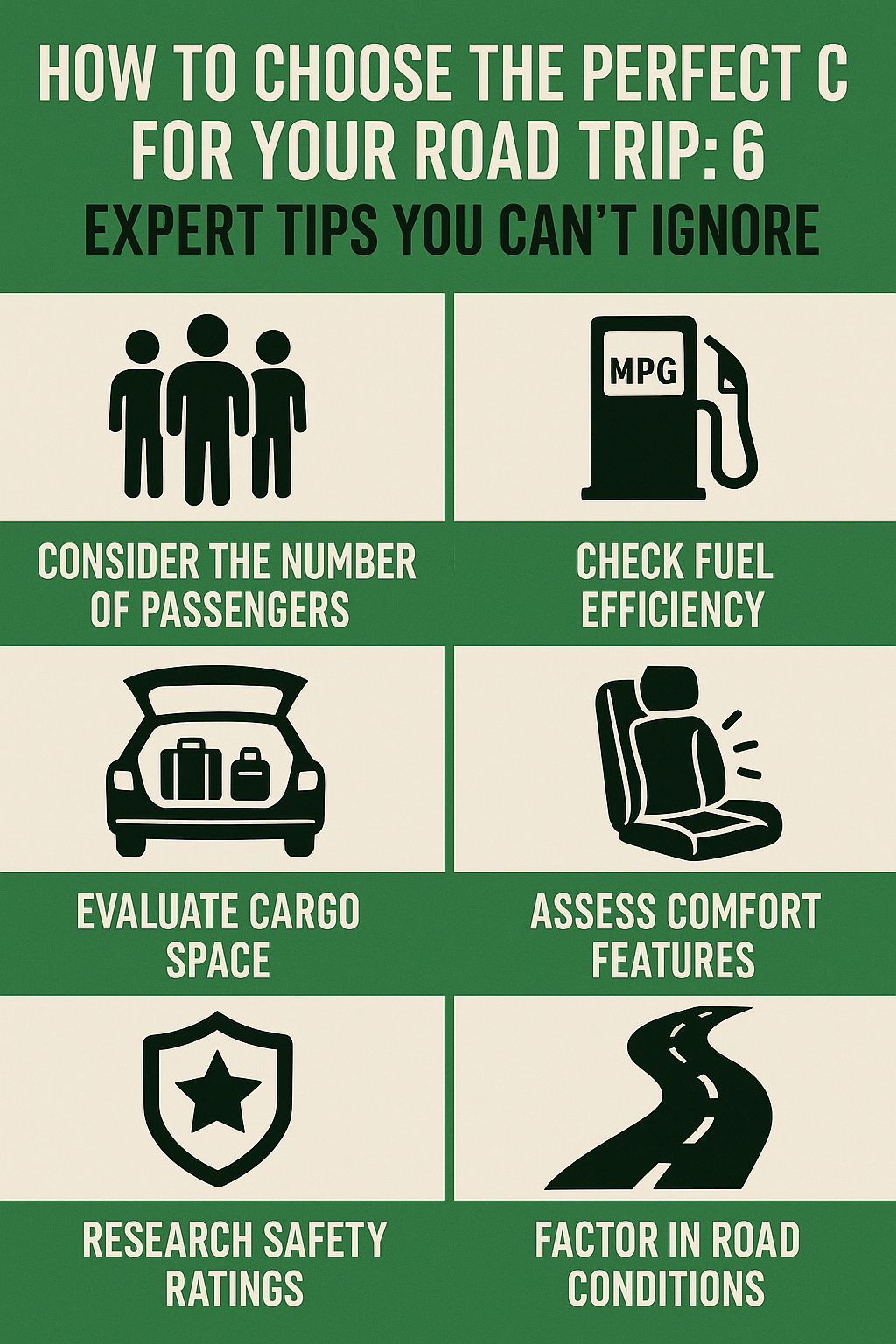
How to Choose the Perfect Car for Your Road Trip: 6 Expert Tips You Can’t Ignore