Introduction
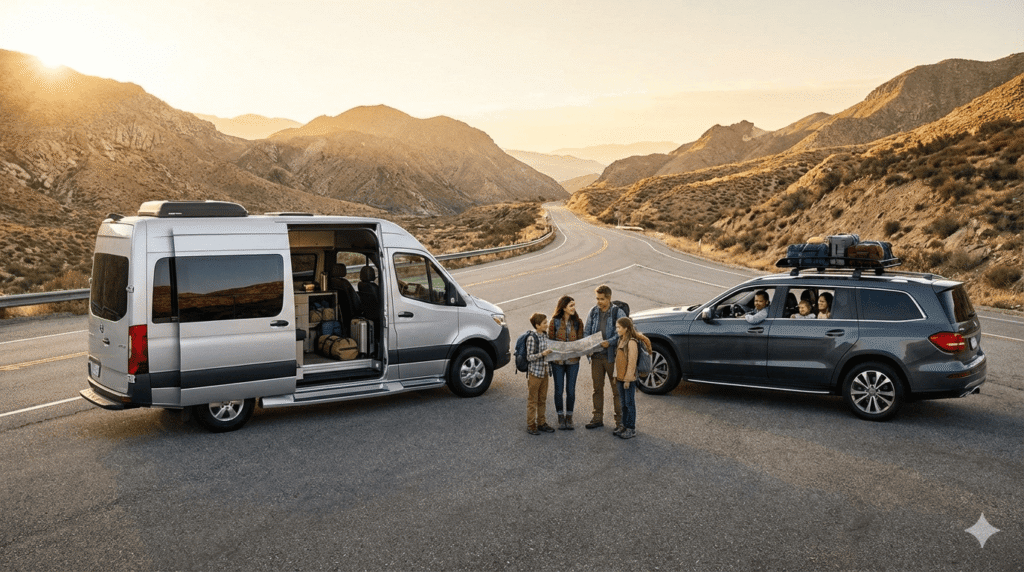
Choosing the right vehicle for a long journey is not a minor detail—it can define your entire travel experience. Whether you are planning a cross-country drive, a multi-city business trip, or a family vacation, comfort, space, cost, and safety play crucial roles. Many travellers debate between a Sprinter van rental and an SUV for long-distance travel. Both options have advantages, but they serve very different needs.
If you prioritize efficiency, comfort, and group convenience, one option clearly outperforms the other. This guide breaks down the real-world differences, helping you make a confident, informed decision.
1. Space & Passenger Capacity
Sprinter Van: Seats 8–15 passengers comfortably with room to move.
SUV: Typically seats 5–7 passengers with limited legroom in the third row.
For large families or group travel, a Sprinter van eliminates cramped seating and baggage compromises. Long trips become significantly more comfortable when passengers can stretch and change posture.
2. Luggage & Storage Power
On extended travel, luggage multiplies—suitcases, coolers, gear, and personal items.
- Sprinter Van: Dedicated cargo space even with full seating
- SUV: Cargo space shrinks when rear seats are used
For airport transfers, outdoor adventures, or transporting business equipment, the van offers superior storage flexibility.
3. Comfort on Long Drives
Studies show discomfort is one of the leading causes of travel fatigue.
Sprinter Vans Often Include:
- Reclining seats
- Climate control zones
- Charging ports
- Walkable aisle
SUVs Offer:
- Standard seating
- Limited mobility
- Less interior height
For journeys over 4–5 hours, enhanced seating and interior space significantly improve travel satisfaction.
4. Driving Experience
Many assume vans are harder to drive.
- Sprinter Van: An elevated driving position improves road visibility; modern models include driver-assistance technology.
- SUV: Easier for city manoeuvring but similar highway performance.
For long highways, both perform well, but vans provide better road awareness due to their height.
5. Fuel Efficiency
Fuel cost matters on long routes.
- Diesel Sprinter Vans often deliver competitive mileage for their size.
- Large SUVs consume similar or more fuel when fully loaded.
When transporting many passengers, a van becomes more fuel-efficient per person.
6. Cost Comparison
Upfront rental costs for vans can be higher. However:
Expense Factor Sprinter Van SUV
Vehicle rental Higher Lower
Number of vehicles needed One, possibly two
Fuel per person Lower Higher
Parking convenience Moderate Easy
For group travel, a single van is often more economical than renting multiple SUVs.
7. Safety Features
Modern Sprinter vans include:
- Lane assist
- Collision prevention
- Stability control
- High seating visibility
SUVs also provide strong safety, but the van’s elevated driver position enhances long-distance monitoring.
8. Travel Purpose Matters
Choose a Sprinter Van If:
- Travelling with large families
- Carrying sports or camping gear
- Planning multi-day road trips
- Prioritizing comfort
Choose an SUV If:
- Travelling with 2–4 people
- Navigating tight urban areas
- Taking short-distance trips
9. Experience Factor
Travel is not only about reaching a destination—it’s about the journey. A Sprinter van fosters group interaction, shared entertainment, and a relaxed environment. SUVs provide a traditional driving feel but may limit movement and shared space.
Conclusion
The decision between a Sprinter van rental vs SUV for long travel depends on group size, comfort needs, and trip duration. For extended journeys, large groups, and luggage-heavy travel, a Sprinter van delivers superior value, space, and overall experience. SUVs remain suitable for smaller groups and short trips, but they cannot match the van’s versatility.
If your goal is a smoother, less stressful, and more comfortable travel experience, the Sprinter van is the smarter long-distance solution.